
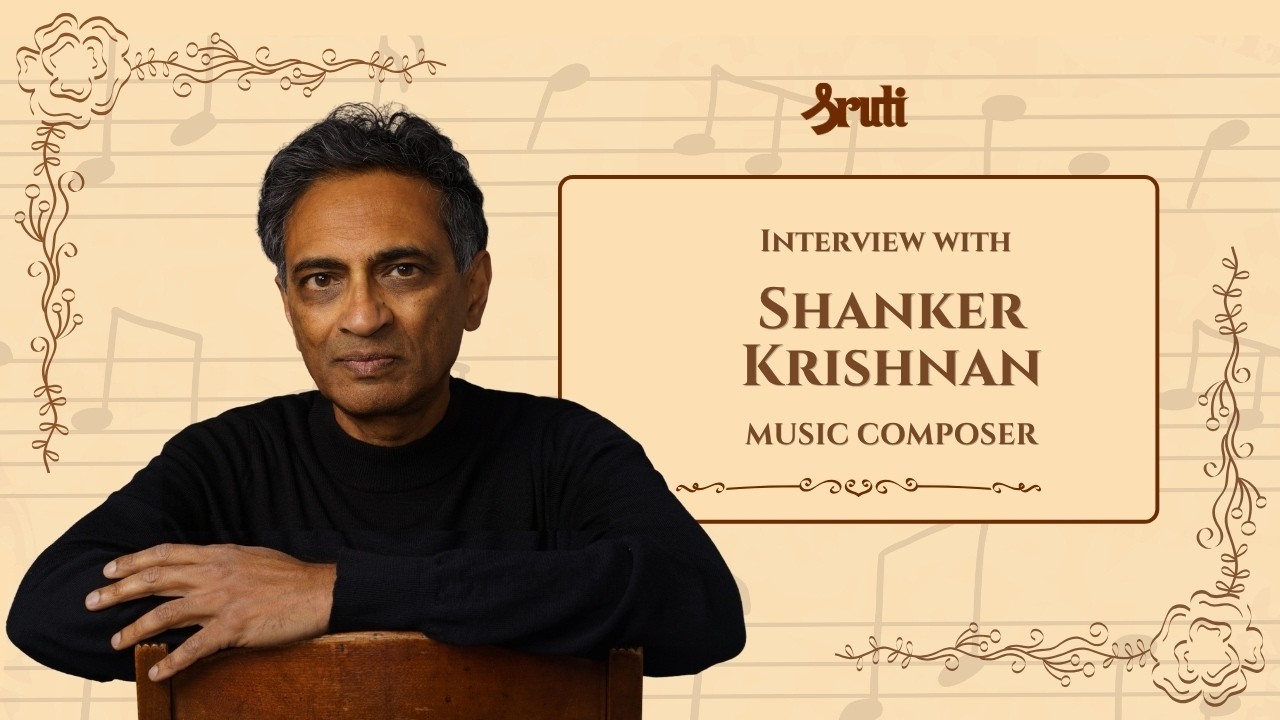
Drawing inspiration from legendary musician Brinda and the works of Bach, composer Shanker Krishnan reflects on composition, creativity, emotion, the Bhagavad Gita, and the possibilities that emerge when Indian and Western classical traditions meet at a fundamental level.
Category: Press
The Times of India: Shanker Krishnan’s ‘Confluence: Raga and Counterpoint’: ‘I integrate the two musical worlds I feel closest to’
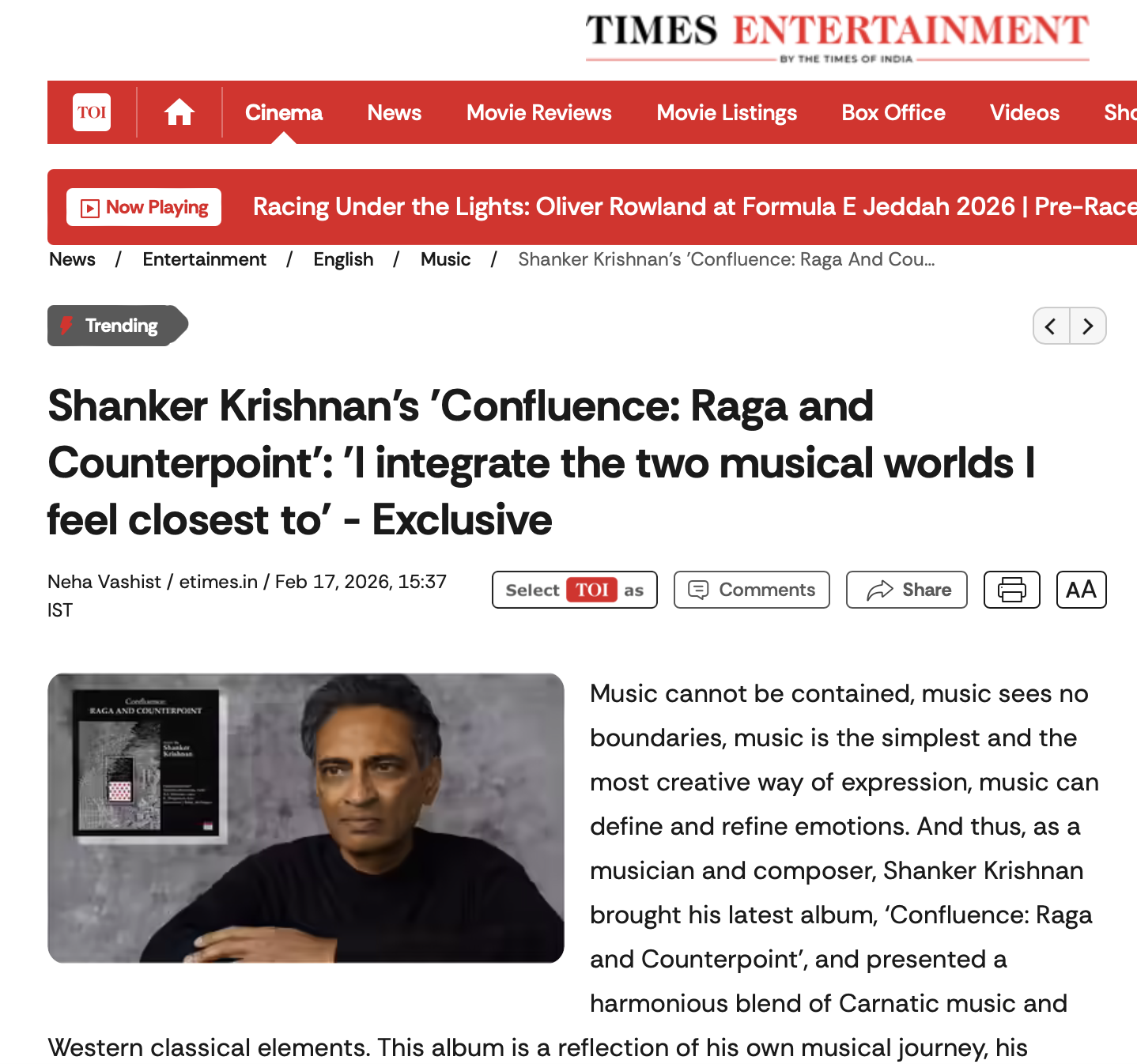
“If I did not compose this music, something essential in my life would feel unfinished”.
“Two very different traditions, Carnatic music and Western counterpoint, have evoked a similar powerful response in me. For me, the connection lies in a shared love of intricacy, with meaning that emerges gradually from finely layered detail. The intricacies can complement each other. Carnatic music unfolding horizontally over time, and counterpoint creating intricacy through vertical interaction.”
The Hindu – Friday Review: Carnatic meets Baroque in Shanker Krishnan’s latest album
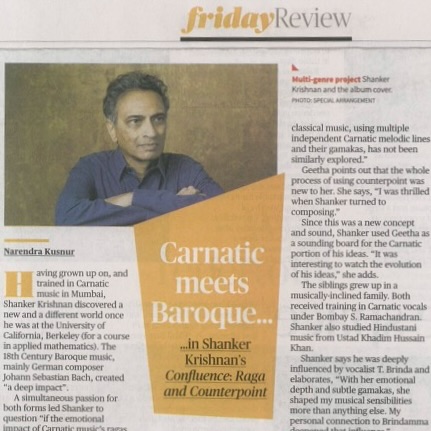
Having grown up on, and studied, Carnatic music in Mumbai, Shanker Krishnan discovered a new and different world, once he was at the University of California, Berkeley (for a course in applied mathematics). The sounds of the 18th century Baroque music, mainly German composer Johann Sebastian Bach, created “a deep impact”.
A simultaneous passion for both forms led Shanker to question “if the emotional impact of Carnatic music’s ragas and gamakas could meet the intricate structure of Baroque counterpoint.” An elaborate exploration of the same led the Washington resident to compose…
The New Indian Express: Musician blends Carnatic and Western in new album
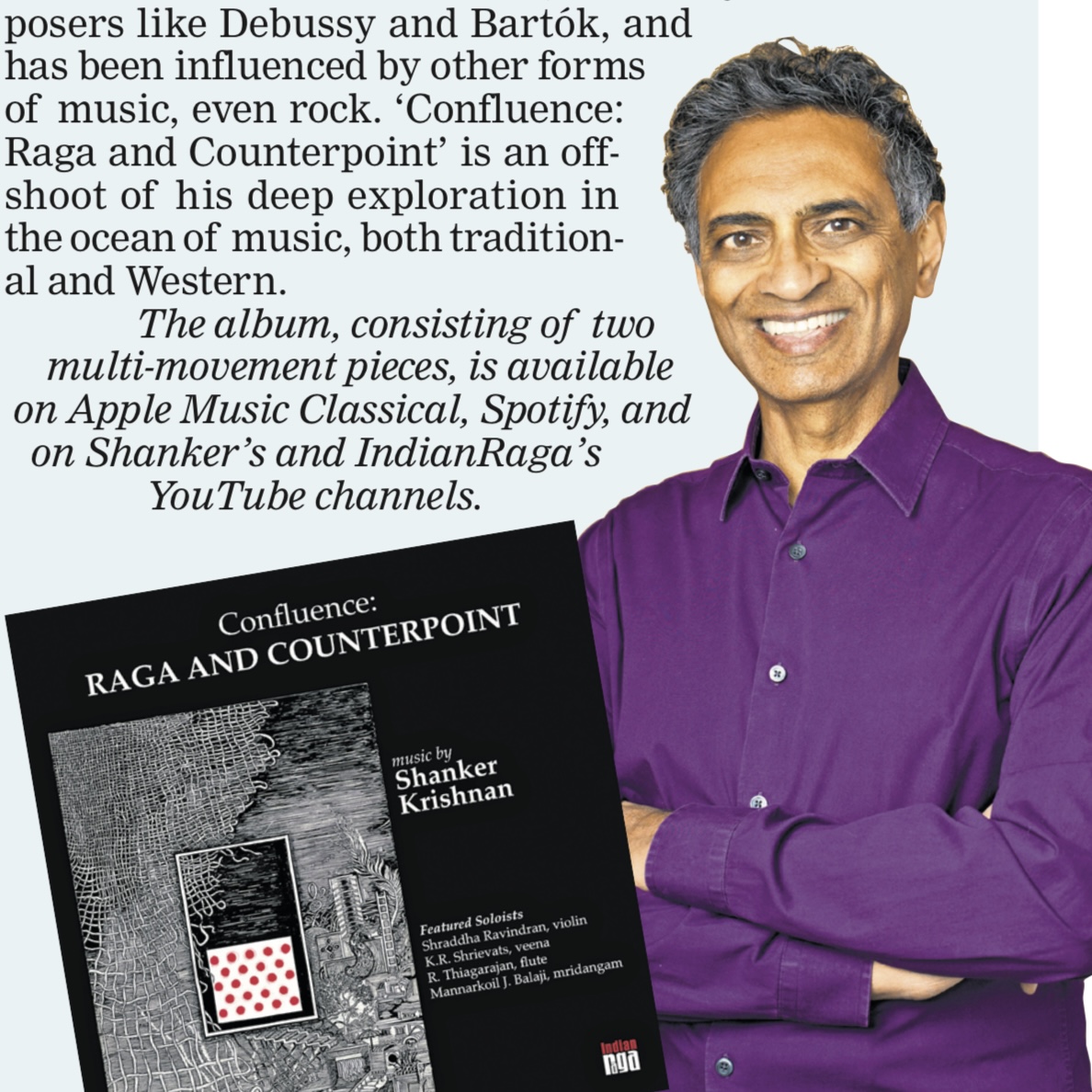
For Shanker, the purpose of music is expression and reflection, and the structure is how the emotion unfolds. “In this album, the Fugue-Kriti traces an emotional arc from tranquillity to foreboding, and Field of Dharma explores the emotional landscape of the Bhagavad Gita,” he says. Shanker’s inclination towards the philosophies and teachings of the Gita, and the emotional perplexities Arjuna encounters at each point of time during the Kurukshetra war, exude in the album.
He believes that Arjuna’s dilemma and the lessons of the Gita are both “timeless and timely”. The themes used in the album have a universal appeal. “The Gita remains very relevant in today’s world. In moments of stress and anxiety, I still turn to its teaching of…”
Sruti Magazine – Confluence: Raga and Counterpoint
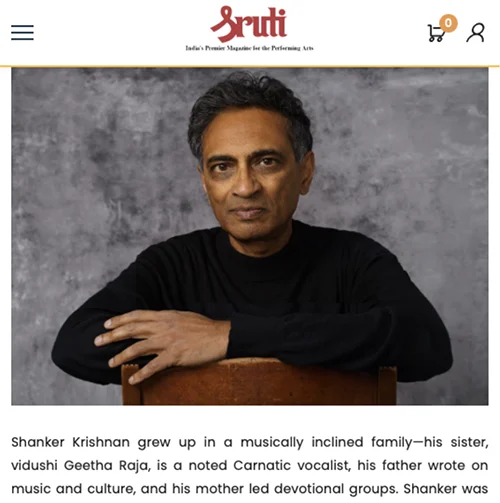
Shanker Krishnan grew up in a musically inclined family—his sister, vidushi Geetha Raja, is a noted Carnatic vocalist, his father wrote on music and culture, and his mother led devotional groups. Shanker was trained in Carnatic and Hindustani traditions under eminent gurus such as vidwan Bombay S Ramachandran and Ustad Khadim Hussain Khan respectively.
Krishnan’s Western classical music training was more unconventional. After coming to the US for graduate study in applied mathematics, he discovered the world of Bach and Bartók, and spent as much time on music study at UC Berkeley as on math. While working in New York, Krishnan took private lessons from composer Nils Vigeland (later Chair of Composition at the Manhattan School of Music). During his 25 years at…
News India Times: Shanker Krishnan’s debut album, a fusion of Carnatic and Western classical music
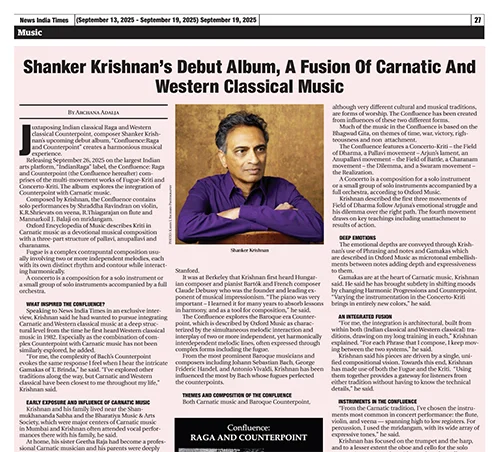
Juxtaposing Indian classical Raga and Western classical Counterpoint, composer Shanker Krishnan’s upcoming debut album, “Confluence:Raga and Counterpoint” creates a harmonious musical experience.
Releasing September 26, 2025 on the largest Indian arts platform, “IndianRaga” label, the Confluence: Raga and Counterpoint (the Confluence hereafter) comprises of the multi-movement works of Fugue-Kriti and Concerto-Kriti. The album explores the integration of Counterpoint with Carnatic music.
Indien-Institut München – Neues Album „Confluence: Raga and Counterpoint“- Shanker Krishnan verbindet Kulturen und Musikwelten
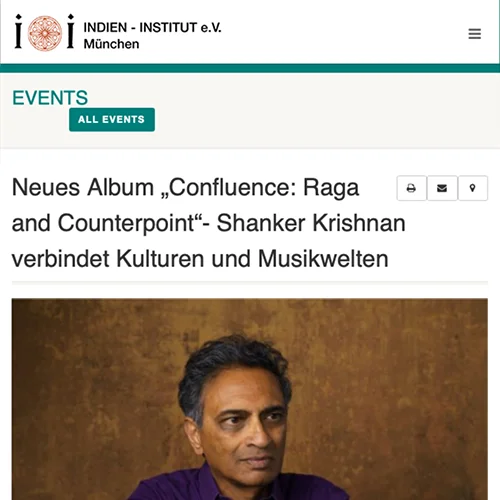
Das neue Debütalbum von Shanker Krishnan wird Ende September 2025 veröffentlicht. Der indisch-amerikanische Musikinterpret vereint dabei südindische und westliche Musikrituale.
“Krishnan wurde in Bombay geboren, wuchs in einer musikalischen Familie auf und war von klein auf von karnatischer Musik umgeben. Später studierte er Mathematik am IIT Madras und in Stanford und arbeitete über 25 Jahre bei der Weltbank in Washington D.C., wobei er sich immer intensiver der Komposition widmete. In Confluence verarbeitet er diese Lebensreise – musikalisch, kulturell und emotional.